
Summary: A drone can support search and rescue operations by improving situational awareness, helping teams examine difficult terrain, and documenting observations. The value comes from preparation: a clear mission, defined roles, safe flight procedures, and a process for turning aerial observations into decisions.
Define what the aircraft must help the team decide
Search and rescue operations move quickly, and the first drone question should be practical: what decision will the flight support? Examples include checking an assigned search sector, observing a shoreline or slope, identifying access routes, documenting an incident area, or helping a command team understand conditions from above.
A defined question helps avoid collecting imagery that no one can use in time. It also guides the choice of aircraft, payload, flight pattern, and communications method.
Build the deployment plan before the incident
Teams are more effective when basic procedures are agreed before an incident occurs. A deployment plan should cover operator responsibilities, visual observation, site safety, batteries and charging, communications, imagery handling, weather limits, and what happens if the aircraft cannot complete the mission.
For each flight, designate a pilot, a person responsible for the mission objective, and a communication link to the operational lead. Depending on local rules and the complexity of the site, additional crew support may be appropriate. Local aviation rules, emergency-service procedures, and site controls always apply.
Select the platform by terrain and response model
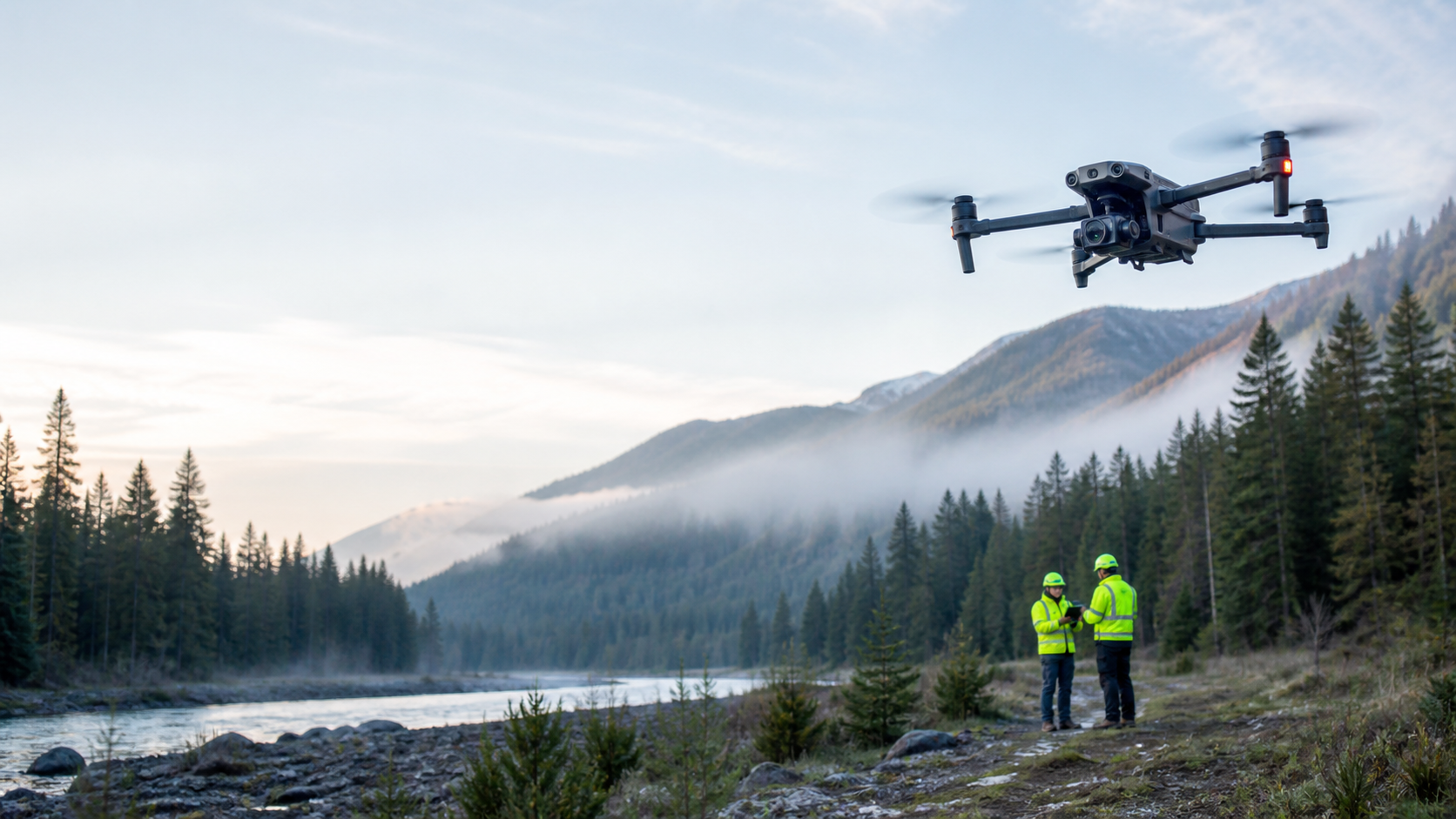
There is no single aircraft for every rescue scenario. A portable all-in-one platform may suit teams that need to travel quickly and deploy from changing locations. A larger platform may be relevant when the mission requires longer operations, additional payload flexibility, or a more complex industrial environment. Compact enterprise aircraft can also be useful where transport space and rapid setup are important.
SK Vector’s Matrice 30 Series page is a starting point for rugged portable response workflows. Teams considering compact operations can also review the Matrice 4 Series. For broader mission planning, see the Search and Rescue industry page.
Prepare thermal and visual observation workflows
Thermal imaging can be valuable when it is used as part of a planned observation process, not as an automatic answer. Conditions such as terrain, surface materials, weather, vegetation, time of day, and distance can affect what a camera shows. Teams should define how an observation will be verified on the ground and how findings are reported to the incident lead.
For visible and thermal observations, agree on:
- the search area and priority sectors;
- the altitude, route, and image overlap needed for the mission;
- how possible findings are marked and communicated;
- who verifies an observation and records the outcome;
- how images, video, and flight records are stored after the operation.
Use communications that fit the incident structure
Aerial information has limited value if it cannot reach the people making decisions. Establish a concise reporting format before launch. For example: sector searched, time, conditions, significant observation, location reference, confidence level, and recommended follow-up. This keeps reports useful without asking an operator to make conclusions beyond what the imagery supports.
When several teams are active, the drone crew should also know who can request a flight change and how that request will be confirmed. Clear communication reduces duplicate effort and helps prevent aircraft activity from conflicting with ground operations.
Train for repeatable, safe operations
Training should include more than aircraft controls. Teams need practice with scene assessment, launch-site selection, pre-flight checks, battery handling, navigation, communications, emergency procedures, and post-flight reporting. Short drills using realistic mission briefs can reveal where a process needs improvement.
It is also useful to review operations afterward. Ask whether the imagery reached the right person, whether the search pattern matched the mission, and whether the team had the equipment and time it needed. These reviews help a program become more reliable without making unsupported claims about outcomes.
Plan the configuration, not just the aircraft
Before procurement, list the expected use cases and the equipment needed for them. That may include aircraft, camera or sensor requirements, batteries, charging, transport, software, training, and support. A clear list helps the team compare quotes fairly and avoid missing a dependency needed in the field.
SK Vector can help teams discuss an appropriate USD configuration. Selected configurations with an available official USD price are shown on product pages; other configurations are offered at 20% off the applicable DJI official price. Request a search and rescue configuration discussion.